
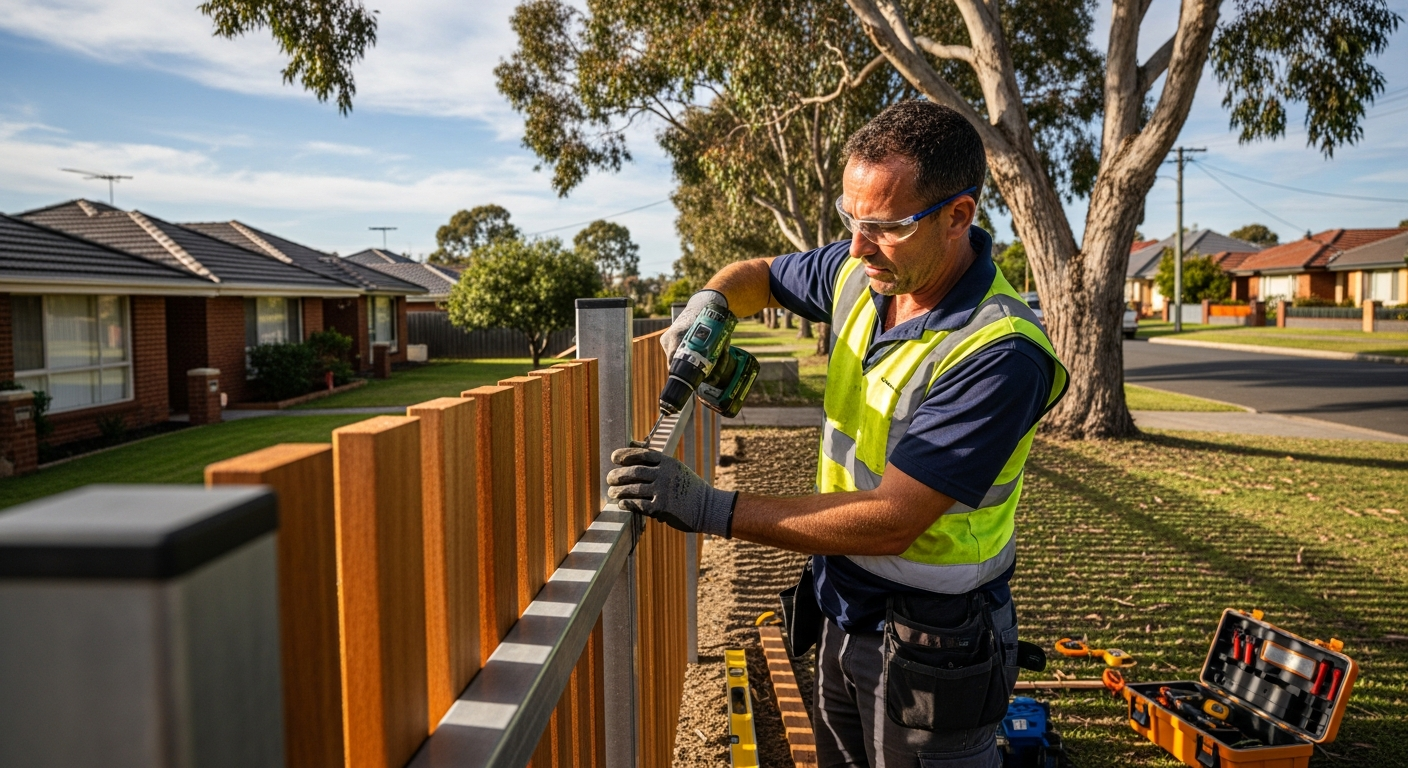
Fencing Installer Melbourne: Setting Up Colorbond Fence Panels
If you have actually ever before stood in your front lawn in Melbourne and tried to visualize exactly how a fencing will in fact look when it's up, you already recognize why this job has a couple of silent difficulties. A Colorbond fence can look tidy for years, yet only if the blog posts are directly, the rails line up, and the panel spacing matches the method your yard really sits, not the method it searches a level brochure.
I'm a fencing installer who has invested plenty of days on genuine grounds, in real weather, with actual shocks under the surface area. The ground here can be persistent, slopes can be refined until you lay a straight string line, and Victorian council and limit regulations can matter greater than people expect. This overview is written for homeowners and anyone planning a fencing setup, concentrating particularly on setting up Colorbond fencing panels, from measuring through to the ended up panels that sit degree and feel strong when you provide a gentle push.
Along the means, I'll make use of the practical wording you learn through seasoned fence installer Melbourne teams, and I'll likewise explain where fence installer installers commonly miss out on details.
Why Colorbond fencing panels are prominent, and what that changes on site
Colorbond is a steel item, which suggests it is light-weight compared to masonry, consistent in colour, and made for outdoor climate. In Melbourne, that matters because you can have a completely dry week followed by wind and rainfall that locate every tiny space. An appropriately set up Colorbond fencing is not simply "good looking", it's predictable.
But "steel fence" also changes the work. With timber, you can sometimes fine-tune points by planing, cutting, or adjusting just how rails attack into the timber. With Colorbond panels, you are taking care of dealt with panel sizes, details rail spacing, and post placements that need to be exact. If the blog posts go in crooked by also a percentage, the rails will not rest naturally and the panel edges can look irregular. When that occurs, you are not just handling look. You're dealing with the fencing's long term stability, since everything is mechanically tensioned with those connection points.
So, yes, this is a job concerning panels. It's also a task about geometry.
Planning the line: boundaries, sight lines, and "where will the messages actually go?"
Most fence installer Melbourne jobs begin with a border conversation and a fact check. A great deal of people presume the fencing line is a line of sight from point A to point B. Often it is. Commonly it's not.
You want to verify:
- where the lawful border rests versus any kind of easements or services,
- whether there are any kind of driveway crossings or council troubles,
- whether you're building to the home line or aligning to a well-known fencing line, and
- what height approvals or neighbor setups are needed.
I've seen fencing installer teams obtain midway through digging and afterwards find they were somewhat off. The fencing still rises, but the property owner winds up paying for rework, which is never ever economical. The lost time alone is discouraging, but it also risks destructive garden functions, transferring messages, or changing rail lengths.
When I'm scheduling a fence installer (or fence installers) for a quote, I ask about existing fencings, keeping wall surfaces, and any "kind of in the method" things like old yard bordering, lawn sprinkler zones, and concrete stubs. Also if you think you know the ground, Melbourne backyards hide surprises.
If you can, note the recommended fence line on the ground and action along it. Look at it from the street and from inside the lawn. View lines matter due to the fact that a fencing that is completely straight from one angle can watch out of line from one more if you're battling a mild slope or a balanced out boundary corner.
Measuring like you'll spend for it later if you rush it
Measuring is where the top quality begins. It's also where lots of fence installer Melbourne work fail, not since the installer is reckless, yet due to the fact that the homeowner requires the fence quicker than the site allows.
The key measurement isn't just "general size." It's the spacing in between articles, the positioning of edge articles, and just how the fencing actions over irregular ground. For Colorbond fence panels, the panel elevation and layout commonly call for certain rail spacing, and that rail spacing requires to "act" as it ranges from message to post.
Here's what I take note of during measuring:
First, the message format. If you area articles based just on size separated by number of panels, you may wind up with uncomfortable partial panels at one end. In some cases that's fine, in some cases it looks careless. An expert fence installer Melbourne team will certainly try to balance it, keeping cut panels to reasonable dimensions so the fencing looks uniform.
Second, the ground account. If one section of the yard inclines, you require to determine how the fence will follow it. Options generally consist of stepping the fence elevation down slowly or preserving panel height and attending to the degree with even more complex modifications at the base. With Colorbond, you can often achieve a tidy look by stepping, yet just if you plan it while determining, not after the holes are dug.
Third, alignment. I like a taut string line for futures, after that I check in numerous areas. A solitary dimension tape stretched from one end can lie to you if the ground dips mid-run.
Tools and products you really need for Colorbond panel installation
A Colorbond fencing is straightforward in concept, yet the mount is mechanical. Panels attach to rails, rails connect to posts, and articles are set in grounds that hold under wind load.
If you have actually ever before enjoyed a fencing installer work, you'll see the pacing is tranquil, because the tools make it repeatable. A lot of tasks use typical devices, yet you do require them to match the task and the ground technique you're using.
Here's an easy material and device inspect that keeps surprises down on the day. This isn't a full parts checklist, just the useful "do we have the right things" mindset:
If any of those aren't right, the fence might still increase, however it will be tougher to obtain it straight and may cost you extra time.
The install process, from footings to end up panels
A Colorbond fence installment has a few stages, and every one influences the next. When you hurry a phase, you don't simply develop a trouble. You create a visual flaw or a structural weak point that will turn up later.
1) Laying out and excavating blog post holes
Once the line is marked, the openings enter. The deepness and size of the holes depend upon local conditions, post dimension, and design demands of the product system. There's no single number I can promise for every yard, because soil can differ and wind exposure can differ.
In Melbourne, I commonly handle compacted dirt near courses and looser dirt in garden areas. If the soil is very sandy or very clay heavy, the ground technique needs to mirror that. A great fencing installer will not claim every home is the same.
I additionally watch out for services. Despite "absolutely nothing obvious," you can face sprinkler lines, old conduit runs, or drainage connections. If you're uncertain, get a services place check prior to excavating. It can conserve real money.
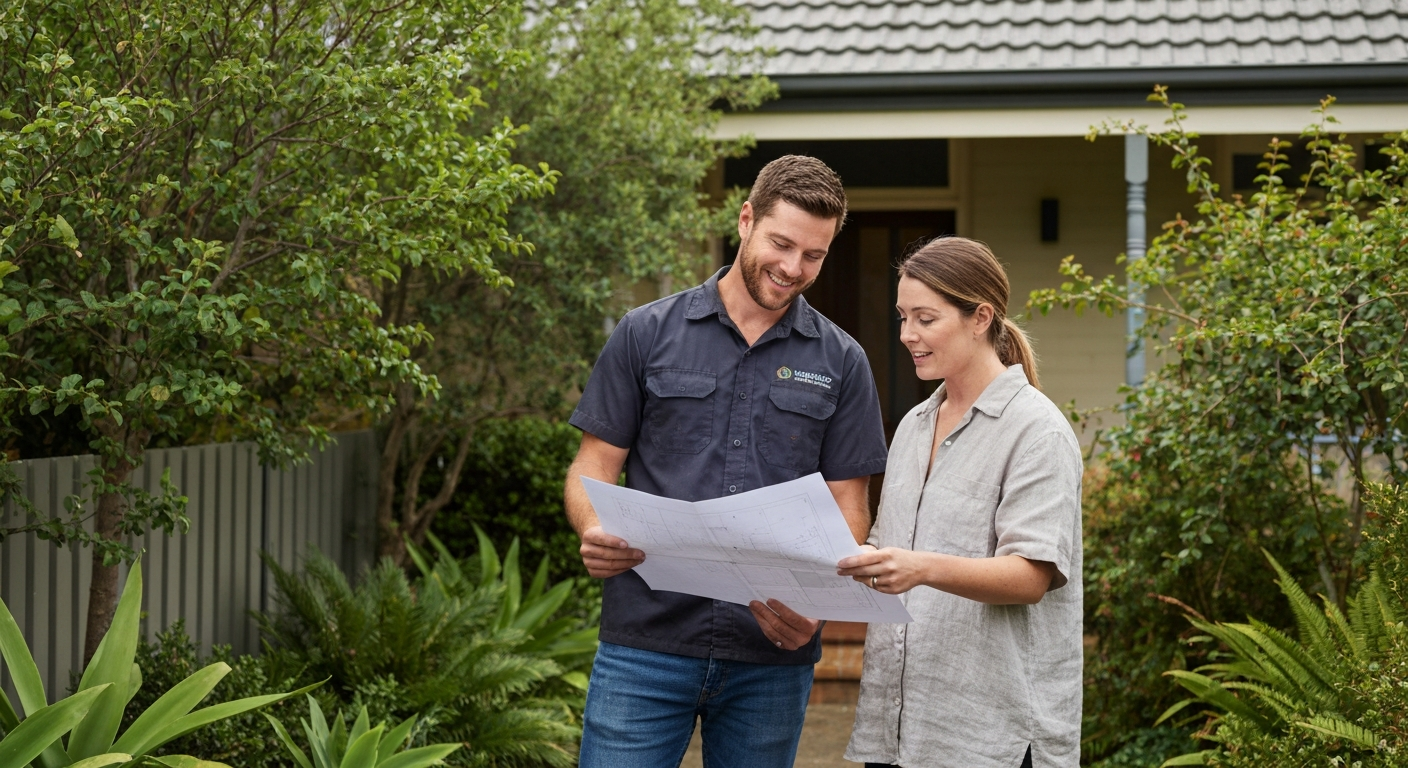
2) Placing messages plumb and aligned
Posts are the heart of the fencing. Rails are designed to connect to posts, and panels are made to sit within the rail frame. That implies if posts are not plumb, you will certainly feel it as you go.
The method is to place a message, set it plumb with a level, then secure it so it holds placement while you finish the footing.
Sometimes the ground is sloped or irregular under the opening. In those circumstances, you need to readjust the message placement and footing approach so it ends up plumb in the last setting. If you "hope" it will correct the alignment of during concrete putting, you can wind up with a message that leans a little once the concrete sets.
3) Concrete treating and checking before rails
Here's where perseverance pays. Concrete needs time to cure prior to rails are connected and the fencing is properly filled. If you attach rails too early and the footing shifts even a little, you'll spend the following hours attempting to fix alignment with adjustments that never ever completely address the problem.
A sensible method is to let concrete cure to a level where movement is not likely, then do a final check of post positioning and spacing. I commonly contact string lines once again also when the articles looked fine. It's an extra step, but it catches the "tiny errors" that turn into noticeable fencing waves.
4) Installing rails and maintaining the fence consistent
Rails are where many people start observing design information. With Colorbond, you desire consistent rail height and spacing. If the fencing line steps as a result of incline, the rail configuration needs to match that decision.
I keep rails straightened at the right elevations and validate end to finish placement. If you have a gateway opening, rail positioning near the gate equipment issues even more. Gate frames rely on regular installing points, and if the rails or blog posts aren't in the proper position, the gate can droop, bind, or refuse to close smoothly.
During rail setup, I utilize braces and fasteners that match the system. Common fasteners can wear away faster or fail differently, and they can likewise create a careless fit that makes panels sit imperfectly.
5) Panel positioning, taking care of, and final spacing
Panels are the visible component, to make sure that's what home owners keep in mind. Yet the panel phase relies upon every little thing beneath being right.
When panels go in, I look for:
- correct seats on the rails,
- consistent panel gaps where the layout utilizes them,
- straightness of panel edges across the line,
- and correct alignment of any type of overlapping components.
Colorbond panels can be flexible if the installer is attentive, but they're not forgiving if the framework is off. If a post is slightly out of line, you could be able to "encourage" a panel forcibly it, but that commonly results in an anxiety factor or a misaligned look that ends up being evident in daylight.
Once panels are taken care of, I do a final walk about, seeing the fence from multiple angles. A fencing can look square from one side and a little off from the other. That's why skilled fence installers do not just inspect with levels, they evaluate with their eyes too.
A peek at usual side situations in Melbourne yards
Every building has its own peculiarities. Melbourne suburbs can share weather patterns, however backyards behave in different ways because of dirt, landscaping, and prior alterations.
One reoccuring issue is unequal ground that seems "small" until you set up rails. A minor dip can make the panel line appear like a ripple if you don't tip and plan. The option is frequently to tip the surround increments that look willful, maintaining panel edges straightened with the design.
Another is existing fences or fencing residues. I have actually gotten rid of areas where the old blog post spacing did not match a standard panel size, so the home owner wanted to "simply connect new panels to old posts." That can be done, however it needs careful alignment and proper brace choice. If the old blog posts are also far apart or badly out of plumb, it's usually far better to restore that area properly.
Wind exposure likewise changes just how much you ought to appreciate alignment and footing quality. If the fence faces open winds, it's still "just a fencing" in the homeowner's mind, however it's an architectural surface area in the installer's world.
Neighbour and council considerations that matter before the first hole
Even when the work is simply concerning mounting Colorbond fence panels, you have to stay aware of guidelines around borders and height. Neighbor relationships also matter due to the fact that fences often sit beside day-to-day life, not just on a plan.
As a sensible matter, talk to your neighbour early ideally. I've had excellent end results from a quick conversation like, "I'm starting following week, the line is below, and the surface will certainly be on your side such as this." The majority of people appreciate clearness, and it reduces the chance of complaints that could lead to delays.
From a security and conformity view, you additionally want to make certain the fencing elevation and positioning align with whatever relates to your residential or commercial property. Some locations have certain guidelines, and approvals can rely on the fence height, limit location, and your existing structures. It deserves examining prior to you devote to a style and height.
A fence installer Melbourne can assist you on regular market technique, but you're still the one in charge of ensuring the build is compliant for your website. If you're unclear, confirm with the pertinent local requirements.
Choosing the panel colour and finish without regretting it later
Colourbond can be found in a series of shades, and in Melbourne, the sun and the moist can change exactly how colours look into time. A dark colour can look fantastic in the display room and afterwards reveal dust or small marks quicker. A lighter colour can blend nicely with light brick or render.
I do not press individuals right into a colour choice, yet I urge a fast "suit test." Hold the colour sample versus your wall, your paving, and your roofing line. Do it in daylight, not under a store light. If you have a garden with strong green foliage, think about contrast. The fence is a backdrop.
Also think about just how the fence will weather. Colorbond is made to last, however any kind of outdoor surface area gathers grime in the first months depending upon rainfall and close-by trees. If you have trees losing pollen or leaves, pick a colour that you won't mind cleaning.
If you're planning a larger task, such as a full limit upgrade with numerous areas, keep the look constant. That's where fence installers make repeat work, due to the fact that property owners observe when one section looks slightly different in tone due to timing, angle, or substitute set differences.
Typical timeline, and why "fast" installs can still be done properly
Homeowners frequently ask, "For how long will it take?" The response depends on range, site complexity, footing problems, and treating time. A straightforward straight run with respectable access can be reasonably quick. A residential or commercial property with inclines, gate openings, and difficult dirt needs even more time.
The part lots of people take too lightly is curing and positioning checks. Hurrying that action is where fence installer installers wind up doing extra journeys and touch ups.
In a calm, tactical set up, you usually see:
- setup and measuring initially,
- digging and article placement,
- concrete treatment period,
- rails and panels setup,
- and ultimately, finishing information around edges and gates.
If a staff promises "all done in a day" for a lengthy limit, ask inquiries concerning curing and how they'll make sure every little thing is square. A fence that bends or wanders after the crew leaves is not a win.
Quality indications you can identify when a fence installer Melbourne team is doing it right
Most property owners can not see whether the footing is perfect when concrete remains in the ground. Still, there are visual indicators throughout the develop that tell you just how mindful the procedure is.
You'll understand you remain in good hands if the installer:
- keeps messages plumb and checks positioning typically,
- uses proper braces and bolts meant for the system,
- doesn't force panels when something is off,
- steps the fence logically on inclines as opposed to "making it function" at the end,
- and tidies up quickly, specifically around yard sides and driveways.
You can additionally ask to see the dimension and layout prior to digging. A fencing installer that has actually done this a thousand times will comprehend why you're asking. The factor isn't to doubt the staff, it's to verify you're building what you agreed on.
One extra useful point: ask where the fencing will rest relative to any type of existing yard features. If you have mature plants near to the boundary, plan for defense. An excellent fence installer Melbourne service treats gardens like component of the work, not an obstacle.
Maintenance after setup, so the fencing maintains looking "just installed"
Colorbond is low upkeep, however it still benefits from basic maintenance. Dust resolves, leaves collect, and seaside or industrial air can make grime much more visible depending on your area.
Maintenance does not need to be complicated. After hefty tornados, I suggest a quick hose pipe down to eliminate surface grit, especially near trees and downwind sides. If you see any kind of marks that do not clean off, use a gentle cleaner appropriate for repainted steel, and stay clear of severe abrasives that can damage the coating.
Also check the fencing regularly around:
- gate joints and locks,
- any blog posts near lawn sprinkler areas,
- and rail bolts if you notice movement.
That tail end appears particular, yet it resembles examining your door hinges after a season of hefty weather condition. If something is loosening, catching it early expenses much less than fixing fence placement later.
How to talk with fence installers and get a quote that makes sense
This is the part that safeguards you from unpleasant surprises. When you request quotes, you're not just contrasting prices. You're contrasting how each fencing installer Melbourne team prepares the job and the details they include.
I typically motivate individuals to request for clearness on:
- panel style and colour,
- post spacing and panel height,
- footing method and site conditions,
- whether the fencing will be stepped for slopes,
- and how entrances are handled.
You don't require to end up being a fence engineer. You simply require adequate detail that you can see whether one quote is based on the same presumptions as another.
To make it simple, I keep a short concern checklist handy, due to the fact that it avoids the timeless "we didn't understand" minute:
The ideal fence installers Melbourne groups will respond to without getting protective, due to the fact that excellent installers expect questions.
Final thoughts from the jobsite perspective
When a Colorbond fencing is set up well, it vanishes into the landscape in the best method. You stop thinking of it, because it really feels right. The line is straight enough to look deliberate. The panels look even. The gate closes smoothly. And after rainfall and wind, you do not obtain that anxious feeling that something shifted.
If you're employing a fence installer, or comparing fence installers, look past the advertising images and focus on the basics: article alignment, rail consistency, right panel seats, and reasonable handling of slopes and boundaries. Fence installer Melbourne job is a mix of measurement discipline and on-the-day reasoning, and that is where experience shows.
Whether you call it a fencing installer, fence installers, or fence installer Melbourne, the core expectation is the same. The panels need to look effortless because the structure beneath is done properly.
If you want, inform me your harsh fencing size, whether the line slopes, and whether you're consisting of an entrance. I can aid you analyze the trick choices that impact panel spacing and the "completed appearance" before you secure a plan.